

Injury Settlement Funding
Common Injuries In Injury Settlement Loans
TriMark Legal Funding provides injury settlement loans to people in serious injury lawsuits, including car accident injuries, workplace injuries, and injuries in slip and fall settlements.

Ever since its founding in 2003, and every day since then, TriMark Legal Funding has been guided by a commitment to help, a strong moral compass, and an ethos that imbues every decision we make, and every action we take:
Always Great Service
We shall provide great service here. At a profit if we can, at a loss if we must, but ALWAYS great service.
Injuries Don’t Wait. Neither Should You.
Who offers the best personal injury loans near me?
One accident can derail your entire life—lost wages, mounting medical bills, and a legal battle that drags on for months or years.
Insurance companies stall, defense attorneys delay, and meanwhile, you’re left struggling to survive.
TriMark Legal Funding exists for this exact moment. We deliver fast, risk‑free lawsuit cash advances to injured plaintiffs who can’t afford to wait.
No gimmicks. No endless red tape. Just the money you need—right now—to keep a roof over your head, food on the table, and pressure off your shoulders while your attorney fights for the settlement you deserve.

Make 2025 YOUR Year
TriMark Legal Funding Provides Immediate Financial Relief
Without Change, Progress Is Impossible; Be Your Change
In This Article
- Back Injury
- Bone Fractures (Broken Bones)
- Burn Injury
- Catastrophic Injury
- Chest Injury
- Concussion Injury (mTBI)
- Degloving Injury
- Disc Injury
- Dog Bite Injury
- Ear Injury | Hearing Loss
- Elbow Injury
- Electrical Injury | Electrocution
- Eye Injury | Vision Loss
- Facial Injury
- Fall Injury
- Foot Injury | Ankle Injury
- Hand Injury | Wrist Injury
- Hip Injury | Pelvic Injury
- Knee Injury
- Neck Injury
- Nerve Injury | Nerve Damage
- Psychological Injury
- Shoulder Injury
- Rotator Cuff Injury
- Slip and Fall Injury
- Soft Tissue Injury
- Spinal Cord Injury (SCI)
- Complete vs Incomplete SCI
- 5 Levels of Spinal Cord Injury
- Struck-By injury
- Stuck-In Injury
- Stuck-In-Between Injury
- Traumatic Brain Injury (TBI)
- Whiplash Injury
Back Injury
Back injuries and neck injuries (see neck injury) frequently occur together in the same accident due to their proximity.
They also share many of the same types of injury, including degenerative disc disease, bulging and herniated discs (see disc injury), spinal stenosis, facet joint injuries, radiculopathy (pinched nerve), vertebral fractures, and spine injuries (see spinal cord injury).
According to the Bureau of Labor Statistics (BLS), more than one million workers suffer back injuries each year, mostly from heavy lifting and falling accidents, each year.
Back injuries account for one in every five workplace injuries or illnesses.
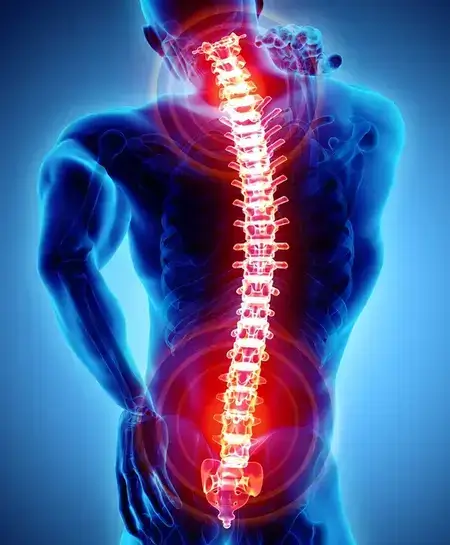
In addition, about a million more back injuries occur outside the workplace, primarily from auto accidents, slip and fall accidents, and sports injuries.
While many back injuries heal with conservative treatment, approximately 1.4 million spinal surgeries are performed each year, with spinal decompression and fusion being the most commonly performed spinal surgery in the US.
Bone Fractures (Broken Bones)
A fracture is one of the most common bone injuries. It happens when a bone is cracked, completely broken, fragmented, or crushed. Common fractures include those of the collarbone, wrist, ankle, and hip.
In addition, about a million more back injuries occur outside the workplace, primarily from auto accidents, slip and fall accidents, and sports injuries. While many back injuries heal with conservative treatment, approximately 1.4 million spinal surgeries are performed each year, with spinal decompression and fusion being the most commonly performed spinal surgery in the US.
About 18.3 million fractures occur annually in the US, with many resulting from falls, car accidents, and sports injuries. Workplace accidents, especially slips and falls, are frequent causes. Fractures can be serious, with some leading to complications.
Serious early bone fracture complications include compartment syndrome, deep vein thrombosis, and pulmonary embolisms. Delayed complications can include avascular necrosis of bone, reaction to internal fixation devices, and complex regional pain syndrome. Many fractures require corrective surgery to set properly, and severe cases, although rare, can be fatal.
Bone Fracture Classification
Bone fractures are separated into classifications.
According to Steven Danaceau, MD of OrthoVirginia, the different classifications for bone fractures are:
- CLOSED FRACTURE: A closed fracture remains underneath the skin.
- COMPLEX FRACTURE: A complex fracture is a bone that is broken into more than two pieces.
- COMPOUND FRACTURE: Also known as an open fracture. A compound fracture pierces the skin and is visible, or a deep wound exposes the broken bone through the skin.
- SIMPLE FRACTURE: A simple fracture is a bone that is broken in two pieces
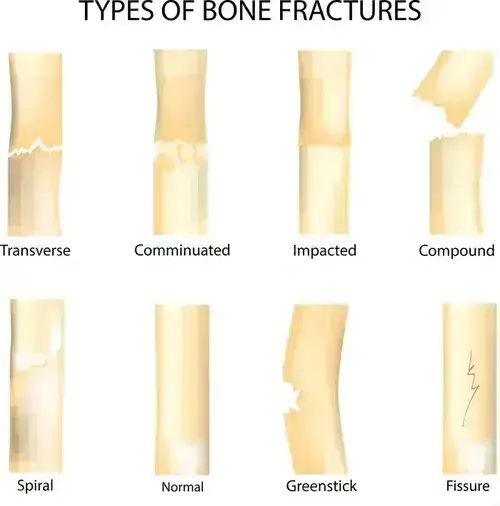
Eight Types of Bone Fractures
According to Johns Hopkins Medicine, there are eight different types of bone fractures:
- Greenstick
This is an incomplete break. A part of the bone is broken, causing the other side to bend. - Transverse
The break is in a straight line across the bone. - Spiral
The break spirals around the bone. This is common in a twisting injury. - Oblique
The break is diagonal across the bone. - Compression
The bone is crushed. This causes the broken bone to be wider or flatter in appearance. - Comminuted
The bone has broken into 3 or more pieces. Fragments are represent at the fracture site. - Segmental
The same bone is broken in 2 places, so there is a “floating” piece of bone. - Avulsion
The bone is broken near a tendon or ligament. A tendon or ligament pulls off a small piece of bone.
Burn Injury
Common burn injuries include thermal burns, radiation burns, chemical burns, and electrical burns. Burn injuries are classified by degree (first, second, third, or fourth) depending on how deeply and severely they penetrate the skin’s surface. According to the American Medical Association, nearly 500,000 burn injuries require medical treatment each year, and about 40,000 of those require hospitalization.
Burn injuries can be severe, leading to complications like infections, necrosis, and scarring. Fire, scalding liquids, chemicals, electricity, and hot surfaces cause most burns. Burn surgery is often essential for severe cases to promote healing and restore function.
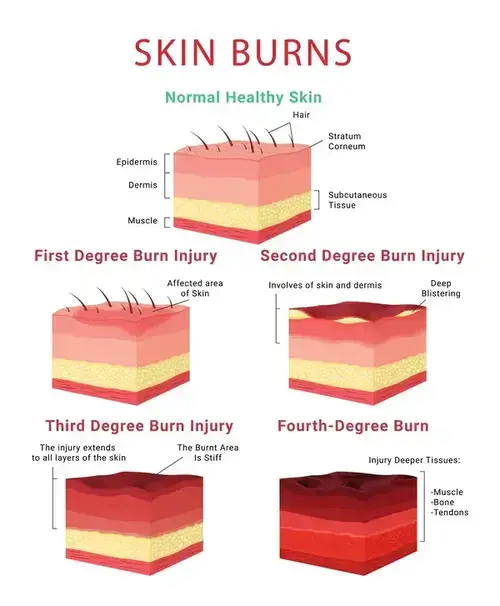
Four Degrees of Burn Injury
According to the University of Rochester Medical Center, the four degrees of burn injury are:
First Degree Burn
First-degree burns are superficial burns.
First-degree burns affect only the outer layer of skin, the epidermis. The burn site is red, painful, dry, and has no blisters. Mild sunburn is an example.
Long-term tissue damage is rare and often consists of an increase or decrease in the skin color.
Second Degree Burn
Second-degree burns are partial-thickness burns involving the epidermis and part of the lower layer of skin, the dermis.
The burn site looks red and blistered and may be swollen and painful.
Third Degree Burn
Third-degree burns are full-thickness burns. They destroy the epidermis and dermis and may penetrate the innermost layer of skin, the subcutaneous tissue.
The burn site may look white or blackened and charred.
Fourth Degree Burn
Fourth-degree burns go through both layers of the skin and underlying tissue, as well as deeper tissue, possibly involving muscle and bone.
Since the nerve endings are destroyed, there is no feeling in the area.
Catastrophic Injury
Catastrophic injuries are not so much a particular type of injury as they are a classification denoting the severity level of an injury.
Chest Injury
Common chest injuries include rib fractures, pulmonary contusions, pneumothorax, puncture wounds, penetrating chest trauma (including high-velocity projectiles and impalements), and crush injuries. These injuries often affect the ribs, lungs, liver, heart, and great vessels. Chest injuries are categorized into minor (e.g., bruises), moderate (e.g., rib fractures), and severe (e.g., lung punctures).
Annually, chest injuries account for about 25% of trauma-related deaths in the US. They can be life-threatening, requiring immediate medical attention. Most severe chest injuries result from car accidents (including seatbelt injuries, steering wheel injuries, and airbag injuries), falling from height accidents, firearms-related incidents, and sports injuries.
Approximately 10-20% of chest injuries require surgical intervention.
Concussion Injury (mTBI)
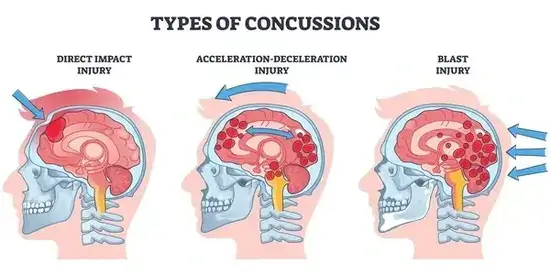
A concussion is a type of mild traumatic brain injury (mTBI) (see traumatic brain injury) caused by a blow or jolt to the head, leading to temporary brain function disruption. Concussion injuries involve the brain, often affecting memory, balance, and cognitive function.
Concussions are common, with about 2.8 million people in the US. sustaining a traumatic brain injury annually. Concussions can be serious, leading to long-term cognitive issues if untreated. Slip, trip, and fall accidents, motor vehicle accidents, and sports injuries are responsible for most concussions.
Three Grades of Concussion
According to Mayfield Brain & Spine, concussions are classified into three grades:
Grade I Concussion
No loss of consciousness; amnesia is either abapplications or lasts for less than 30 minutes
Grade II Concussion
Loss of consciousness for less than five minutes OR amnesia for between 30 minutes and 24 hours
Grade III Concussion
Loss of consciousness for more than five minutes OR amnesia for more than 24 hours
Degloving Injury
A traumatic degloving injury occurs when the skin and underlying tissues are forcibly torn away from the bone, exposing underlying muscles, tendons, or bones. They are classified into open degloving (visible) and closed degloving (internal) types.
Degloving can occur anywhere on the body, but the most commonly affected areas include the extremities (hands, feet, fingers, legs, and arms), abdomen, chest, head, and face.
These injuries are rare, accounting for only about 1% of traumatic injuries. However, they are serious traumatic injuries that can lead to significant complications and usually require early surgical intervention to save the affected limb or tissue.
Most degloving injuries result from motorcycle accidents, car accidents, animal bites (see dog bite injury), work-related and construction accidents, and falls from heights.
Disc Injury
Disc injuries include disc compression, herniated discs, bulging discs, disc protrusions, and degenerative disc disease, and involve the spinal discs between vertebrae. These injuries can compress the spinal cord’s nerves, causing numbness and pain in the head, neck, back, arms, or legs.
Disc injuries are classified into compressions, bulging, protrusions, and herniation (sequestration). Injured discs are a common occurrence, with millions of people affected annually.
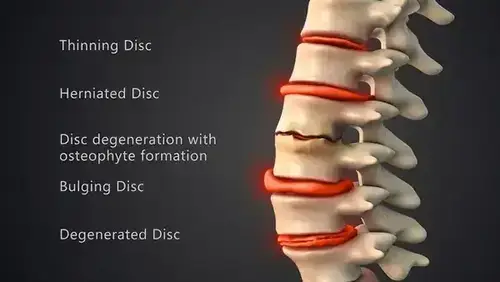
Causes include aging, poor posture, ergonomic injuries, improper lifting, especially in awkward positions, repetitive bending over and lifting, trauma from vehicle accidents, slipping and falling accidents, contact sports, and work injuries.
While many disc injuries heal with conservative treatment, about 1.4 million spinal surgeries are performed each year in the US.
Four Stages of Disc Injury
According to The Disc Doctor, the four stages of disc injury are:
Disc Compression
Excessive and repetitive strain, trauma, or degenerative changes compresses or squashes the disc, which in turn causes tearing of the annular fibers that hold the disc in place.
The jelly-like center of the disc (nucleus) is aggravated but remains contained within the disc structure.
Disc Protrusion
The soft jelly-like material comprising the nucleus escapes from the structure through the larger tears in the annular fibers but is still connected.
Disc protruding now occurs and presses on the exiting spinal nerve which in most cases causes an increase in pain and other symptoms such as referred numbness, burning or tingling sensations.
Bulging Disc
Continuous loading and strain on this part of the body causes the nucleus to push the annular fibers further out into a bulge, causing inflammation that can irritate the spinal nerve.
At this point the nucleus is still contained within the annulus but only because the outermost fibers are holding it in.
Herniated Disc
In the case of a herniated or sequestrated disc, fragments from both the annulus and nucleus have broken through the posterior longitudinal ligament into the epidural space. The fragments are now outside the segment, compressing most of the spinal nerve.
This is the most serious stage, where pain levels are severe, and surgical intervention may be required.
Dog Bite Injury
Dog bites, dog attacks, and dog mauling can cause massive injuries and life-threatening infections, including tetanus, meningitis, and rabies.
The most commonly targeted areas being the head and face, hands, neck, and arms.
Common dog attack injuries include extensive damage to skin, muscles, tendons, and ligaments, as well as nerve damage, facial disfigurement, traumatic amputations, scarring, blunt force trauma, broken bones, and crush injuries. In addition, many victims experience emotional distress, recurrent nightmares, and post-traumatic stress disorder (PTSD).
Since 2016, just three breeds of dog have been responsible for 81% of all fatal dog attacks in the US. They are the Pitbull (65.6%), Rottweiler (10.4%), and German Shepherd (4.6%).
According to the Centers for Disease Control and Prevention (CDC), 4.5 million people in the US are bitten by a dog each year. Of these, over 5,300 are USPS workers, 50% (2.25 million+) are children, 800,000 require medical attention (2,192 each day), and in 2023, 58 dog bite fatalities were reported.
Many dog attack injuries require extensive surgery, hospitalization, and recovery, and in 2022, the average dog bite insurance settlement was $64,555.
Ear Injury | Hearing Loss
Ear and hearing injuries include trauma to the outer, middle, or inner ear, often causing tinnitus (ringing in the ears) and hearing loss.
Common types of ear injuries are ruptured or perforated eardrums, ear infections, and noise-induced hearing loss. Hearing loss levels range from mild to profound.
About 37.5 million adults report some hearing difficulty. These injuries can be serious, leading to permanent hearing loss and equilibrium or balance issues.
Causes include loud noises, failure to use ear protection in industrial areas, head trauma, explosions or blast injuries, and infections. Many ear injuries require medical treatment, with thousands needing surgery annually.
Elbow Injury
Common elbow injuries include fractures, dislocations, and tendonitis (e.g., tennis elbow). These injuries range from mild (strains) to severe (fractures).
Elbow injuries are relatively common, especially in athletes and manual laborers. Elbow injuries can be serious, leading to chronic pain or disability.
Most elbow injuries result from falls, sports, vehicle accidents, and repetitive motions. Approximately 85% of elbow dislocations require surgery.
Electrical Injury
Although used interchangeably, electrocution and electric shock injuries describe two different things.
Electrocution is fatal; it happens when an electrical charge passes through the body that is strong enough to cause death.
Electrical shock injuries, on the other hand, range from minor to major electrical shocks and can cause external and internal burns, cardiac arrest, organ failure, cognitive issues, physical disabilities, nerve damage, and paralysis.
A third type, arc welding injuries, occurs when unprotected or unshielded skin or eyes are exposed to electric welding arcs. Arc welding emits intense ultraviolet (UV) and infrared (IR) radiation. It can burn skin similar to severe sunburn and cause severe, permanent eye damage, including blindness and ocular melanoma, a rare type of eye cancer commonly associated with welding.
Annually, over 4,000 electrical injuries occur in the US, with more than 300 fatalities. They can be extremely serious, often requiring immediate medical attention.
Most electrical injuries are caused by direct contact with live wires, electrical arcs, and faulty equipment. Most electrocutions and major electrical injuries occur in industrial, construction, and maintenance environments.
While exact figures for surgeries are not widely reported, severe electrical injury cases frequently require surgical intervention.
Eye Injury | Vision Loss
Common eye and vision injuries include corneal abrasions, foreign objects, injection injuries, and blunt trauma. These injuries range from minor (scratches) to severe (globe rupture). Annually, about 2.4 million eye injuries occur in the US.
Eye injuries can be serious, leading to vision loss or total blindness. Accidents, sports, exposure to chemicals, and lack of proper personal protective equipment (PPE), especially the failure to use job-specific or activity-specific protective eyewear, are the cause of most eye injuries.
Most eye injuries occur at home or in the workplace. Thousands of eye injuries require surgery each year. Proper use of protective eyewear can prevent up to 90% of common eye injuries.
Facial Injury
Common facial injuries in motor vehicle collisions and slip and fall accidents include fractures, lacerations, broken teeth, blunt force injuries, crush injuries, and soft tissue damage.
Facial injuries are common, with over half of car accident victims experiencing them. They often occur from impacts with dashboards, windshields, steering wheels, airbags, or the ground.
Dog bites are another common cause of facial injuries, with roughly 50% of dog attacks (see dog bites) resulting in injuries to the face.
Facial injuries can be serious, leading to disfigurement or functional impairment. Many require plastic surgery or cosmetic surgery, especially for severe fractures, animal attacks, and crush injuries. Annually, about 2.4 million facial injuries occur in the US, with a significant number requiring surgical intervention.
Fall Injury
Foot Injury | Ankle Injury
Common foot and ankle injuries in car accidents, workplace accidents, and slip and fall accidents include broken bones, soft tissue damage to tendons and ligaments, avulsion fractures, crush injuries, and sprains.
Annually, about 2 million foot and ankle injuries occur in the US. They often result from impacts, falls, or heavy objects being dropped on them. These injuries can be serious, leading to chronic pain or disability. Many require surgery, especially severe fractures and crush injuries.
Foot and ankle injuries frequently occur in high-impact accidents, construction site accidents, and workplaces where heavy equipment is operating.
Hand Injury | Wrist Injury
Hand and wrist injuries include fractures, sprains, carpal tunnel syndrome, tendonitis, tendon and ligament damage, degloving, and crush injuries. Annually, about 1 million hand injuries occur in the US, with 20% related to workplace accidents.
Common causes include falls, repetitive motions, extensive time using a computer mouse, auto accidents, motorcycle accidents, and stuck-in-between accidents. These injuries often occur at home, work, or during sports.
Many require surgery, especially for severe fractures, and surgical complications can be serious.
Hip Injury | Pelvic Injury
Fractures or damage to the pelvic area, often requiring extensive rehabilitation.
Knee Injury
Damage to the knee joint, including ligament tears and fractures, often requiring surgery.
Neck Injury
Neck injuries and back injuries (see back injury) often occur together and share many of the same types of injury because they are in such proximity.
Common neck injuries include bulging and herniated discs (see disc injury), degenerative disc disease, spinal stenosis, facet joint injuries, vertebral fractures, radiculopathy (pinched nerves), and cervical spine injury resulting in spinal cord disruption (see spinal cord injury), which typically results in total paralysis, called tetraplegia.
According to a recent study, car accidents cause about 869,000 cervical spine injuries per year in the US. That figure includes 841,000 sprain/strain injuries (see whiplash), 2,800 spinal disk injuries, 23,500 fractures, 2,800 spinal cord injuries, and 1,500 dislocations.
While many neck injuries heal with conservative treatment, approximately 200,000 neck surgeries are performed each year, with cervical discectomy and fusion being the most commonly performed neck surgery in the US.
Nerve Injury | Nerve Damage
Injuries that affect the nervous system, leading to pain, numbness, and weakness.
Psychological Injury
Emotional and mental trauma, including post-traumatic stress disorder (PTSD), anxiety, and depression, are common following an accident.
Shoulder Injury
Shoulder injuries include rotator cuff tears, muscle, tendon, and ligament tears, dislocations, and fractures. Annually, millions of shoulder injuries occur in the US, often from motor vehicle accidents, slipping and falling accidents, sports injuries, and workplace accidents. They can be serious, leading to chronic pain, loss of function, or disability. Common causes include blunt force trauma impacts from vehicle accidents or falling accidents, repetitive motion injuries, and heavy lifting. Many require surgery, with over 460,000 rotator cuff surgeries performed annually.
Slip and Fall Injury
More than one million people visit the ER due to slips trips and falls, and about 17,000 people die from them each year. Common slip and fall injuries include fractures, concussions, disc injuries in the back and neck, brain injuries, head injuries, hand, wrist, arm, shoulder, and other soft tissue injuries, as well as broken teeth and other facial injuries. Falls from height often result in multiple fractures, spinal injuries, internal injuries, and traumatic brain injuries. These injuries range from minor (bruises) to severe (disabilities or death). Annually, over 8 million emergency room visits in the US are due to falls. They frequently occur at home, at work, recreationally, and in public places such as retail stores, casinos, and restaurants and are often caused by wet floors, uneven surfaces, and ladders. Falls result in over 800,000 hospitalizations and an average of 46,653 deaths each year. Severe cases may require surgery or multiple surgeries, as well as extensive physical therapy to regain function.
Soft Tissue Injury
Soft tissue injuries are damage to muscles, tendons, ligaments, connecting tissues, cartilage, and the spongy cushions between joints and vertebrae. Common injuries include cuts, tears, avulsion fractures, and bulging, protruding, and herniated discs (See Disc Injuries). Soft tissue injuries occur frequently in motor vehicle accidents, slip and fall incidents, sports injuries, and workplace accidents. Soft tissue injuries can be serious, leading to pain, swelling, and limited mobility. Most are caused by trauma or overuse. Annually, about 900,000 cases occur in the US, with many requiring medical attention.
Spinal Cord Injury
The impact of a car crash accident and airbag deployment on the human body, especially at high speeds, and the rapid deceleration-acceleration-deceleration whipping motion of the head that is often associated with them can inflict massive g-force injuries on the body, spine, and spinal cord. Falls can also cause long-term disabilities from a cervical spine injury or spinal cord injuries that range from bulging and herniated discs and vertebrae dislocations to spinal compression injuries and incomplete or complete spinal cord severing injuries. Severe spinal injuries typically result in partial paralysis (paraplegia) or total paralysis (tetraplegia) below the level of the spinal injury.
According to Flint Rehab, there are five levels of spinal cord injury:
🔸 Cervical
🔸 Thoracic
🔸 Lumbar
🔸 Sacral
🔸 Coccygeal
Struck-By Injury
Including the typical “pedestrian hit by car” scenario, struck-by injuries occur when an object or equipment forcibly hits a person.
Common struck-by injuries include simple and compound fractures, crush injuries, soft tissue damage, and traumatic brain injuries.
They are prevalent in both construction and industrial environments, with about 15,200 nonfatal injuries and 150 fatalities annually in the US. Most incidents involve vehicles, heavy equipment, or falling objects. These injuries can be severe, often requiring surgery. Protective measures are crucial to prevent such accidents.
These injuries are categorized into four types:
- Struck by flying objects
- Struck by falling objects
- Struck by swinging objects
- Struck by rolling objects
Stuck-In Injury
Stuck-in injuries occur when a person’s body or body part gets caught in, pulled into, sucked into, squeezed, jammed, wedged, crushed, wrapped around, or pinched by machinery or between two objects.
The resulting injuries are grievous, including multiple compound fractures, massive blood loss, traumatic amputations, traumatic dislocations, neck, back, and spinal cord injuries, traumatic brain injuries, asphyxiation, loss of limb(s), crush injuries, tetraplegia, and death.
Some graphic examples of this type of horrific injury include workers being buried in a collapsed excavation trench or mining cave-in, falling or being pulled into machinery, hands and arms getting torn off by running machinery, or body or body parts being forcefully wrapped around rolling or rotating shop equipment such as drill presses, lathes, sanders, or grinders.
And last, but certainly not least, is being consumed or ‘ingested’. This is the term for when the entire body falls, is pulled, reeled, or sucked into a large piece of running equipment or machinery, such as a wood chipper, industrial shredder, an industrial meat grinder, or a jet engine.
There are about 15,200 nonfatal injuries and 150 fatalities that occur annually in the US. Stuck-in injuries mostly occur in construction, industrial, production, farming, and manufacturing environments. Most incidents involve machinery, vehicles, or collapsing structures, and these injuries are, understandably, quite severe or fatal.
Stuck-In-Between Injury
Stuck-in-between injuries occur when a person’s body or body part gets caught, pinned, crushed, squeezed, or pinched by machinery, vehicles, or between two objects. Most incidents involve fast-moving machinery, heavy equipment, commercial vehicles, or construction equipment.
Traumatic Brain Injury (TBI)
A traumatic brain injury occurs when blunt force trauma, a skull-compressing or skull-penetrating injury, or a crush injury to the head damages the brain. TBIs are classified as mild (mTBI), moderate, or severe. Common TBIs include concussions and diffuse axonal injury (DAI).
Motor vehicle accidents and workplace accidents are two of the leading causes of traumatic brain injury. TBIs can be severe, leading to long-term disability, cognitive deficits, or death.
Many require surgery, especially in severe cases. Severe traumatic brain injuries are considered catastrophic injuries.
According to the Brain Trauma Foundation, of the 2.5 million TBI’s that occur annually, 20% (500,000) are attributed to motor vehicle accidents. In addition, about 214,000 TBIs require hospitalization, about 69,000 result in death, and for another 80,000 to 90,000, their TBI causes long-term, often life-changing disabilities.
Whiplash
Whiplash is the term commonly used to describe muscle, ligament, and tendon injuries to the soft tissues of the neck. It is one of the most common car accident injuries, as well as the most common airbag injury.
Whiplash is caused by rapid, uncontrolled back-and-forth or side-to-side whipping movements of the head. It is often seen when people get rear-ended or are involved in a T-bone accident. Whiplash affects about 3 million Americans annually.
Understanding these common car accident injuries can help you recognize the severity of your situation and seek appropriate medical and legal assistance. Legal funding can provide the financial support you need to cover medical expenses and other costs during recovery while your attorney negotiates the maximum compensation you deserve.